
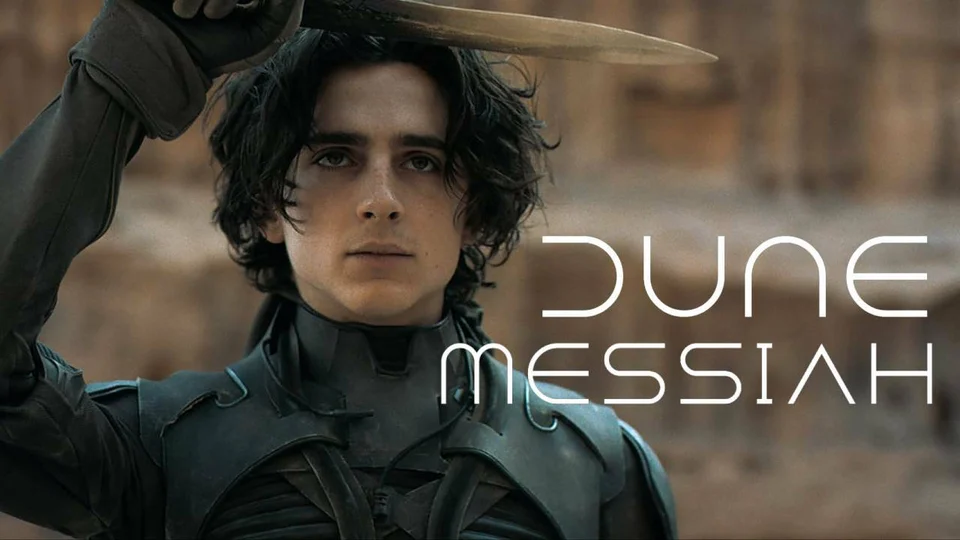
After maintaining strong global momentum well into early 2026, Dune: Part Two has not only solidified its place as a major cinematic success but has also set the stage for the next chapter in the saga. Director Denis Villeneuve has officially begun early development on a third installment, which is widely anticipated to adapt Frank Herbert’s Dune Messiah. This move signals a clear evolution in the creative direction of the series, transitioning it from a two-part interpretation of a single novel into a carefully structured trilogy with a broader narrative scope.
The decision to expand the story into a third film reflects both artistic ambition and strategic planning. Rather than treating the Dune films as a traditional franchise with loosely connected sequels, Villeneuve’s approach positions the series as a continuous and cohesive cinematic narrative. Each installment builds directly upon the previous one, maintaining a consistent tone, visual identity, and thematic depth. This long-form storytelling method distinguishes Dune from many modern blockbuster franchises, which often prioritize rapid production cycles over narrative cohesion.
A major factor enabling this expansion has been the performance of Dune: Part Two. The film achieved significant global box office success while also earning widespread critical acclaim. It managed to balance large-scale spectacle with thoughtful storytelling, reinforcing confidence in the franchise’s long-term viability. In an industry where financial performance often dictates creative direction, the success of Part Two provided the necessary foundation for exploring more complex and ambitious material in a third film.
The anticipated adaptation of Dune Messiah introduces a notable shift in narrative focus. While the first two films primarily center on Paul Atreides’ rise to power, the third installment is expected to examine the consequences of that power. The story moves away from external conflict and grand battles, instead delving into political intricacies, religious influence, and the psychological burden of leadership. This change presents unique challenges for adaptation, as the source material is more introspective and less action-driven.
Translating this nuanced narrative into a compelling cinematic experience will require careful balance. Villeneuve will need to preserve the philosophical depth of the story while ensuring it remains engaging for a wide audience. This is particularly important within the context of a high-budget production, where expectations for visual spectacle and pacing are significant. Successfully adapting Dune Messiah could redefine how mainstream science fiction films handle complex themes without compromising commercial appeal.
From an industry perspective, the development of a third Dune film reflects a broader shift in how studios approach blockbuster filmmaking. Instead of investing in sprawling cinematic universes with uncertain long-term direction, there is a growing emphasis on fewer, more focused projects with clear narrative goals. Dune exemplifies this model by combining disciplined storytelling with high production value and consistent creative leadership.
The involvement of returning talent also plays a crucial role in maintaining continuity. Timothée Chalamet is expected to reprise his role as Paul Atreides, providing a stable anchor for the evolving narrative. Consistency in casting, direction, and overall vision helps strengthen audience connection to the story, ensuring that each installment feels like a natural progression rather than a disconnected sequel.
Another defining aspect of the Dune series is its commitment to a finite structure. By shaping the films into a trilogy with a clear beginning, middle, and end, Villeneuve avoids the pitfalls of open-ended franchises that risk overstaying their welcome. This approach emphasizes narrative closure and thematic resolution, offering a complete storytelling experience that respects both the source material and the audience’s investment.
As development continues through 2026, the third film will be closely watched by both industry observers and audiences. Its success or failure could have significant implications for the future of large-scale science fiction filmmaking. If Villeneuve manages to deliver a film that maintains both commercial strength and intellectual depth, it may encourage studios to pursue more thoughtfully structured narratives rather than relying solely on formula-driven franchises.
Ultimately, the next chapter of Dune represents more than just another sequel. It stands as a test case for whether ambitious, high-budget storytelling can sustain its integrity across multiple films while still appealing to a global audience. The outcome will likely influence how the film industry approaches long-form storytelling in the years to come, potentially reshaping expectations for what blockbuster cinema can achieve.